
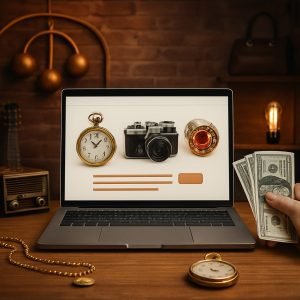
An establishment known as a pawn shop offers secured loans to private customers by pledging their own belongings as security. Tools, jewelry, electronics, & musical instruments are among the items that are frequently accepted as collateral. Based on their appraisal of the item’s value, the pawnbroker makes a loan offer. The pawnbroker will keep ownership of the item until the loan, plus interest and fees, are paid back if the borrower accepts the terms of the loan.
Key Takeaways
- A pawn shop is a business that offers loans in exchange for personal items as collateral.
- To pawn an item, bring it to the pawn shop, agree on a loan amount, and receive cash in exchange for the item.
- To sell an item, bring it to the pawn shop, agree on a price, and receive cash in exchange for the item.
- Pawn shops determine the value of items based on factors such as condition, market demand, and resale potential.
- The loan process involves agreeing on a loan amount, receiving cash, and leaving the item as collateral until the loan is repaid.
- The redemption process involves repaying the loan amount plus any fees to retrieve the pawned item.
- If you don’t redeem your item, the pawn shop has the right to sell it to recoup the loan amount.
The right of the pawnbroker to sell the item in order to recoup the loan amount exists should the borrower default on the loan. Pawn shops Also provide the opportunity to sell goods directly to customers without obtaining a loan. Pawnbroker evaluates the item and extends a purchase offer in this case.
If the seller accepts, they will be paid in cash right away and won’t have to pay it back. State & local laws apply to these establishments, necessitating strict adherence to rules about interest rates, holding periods, & other operational details. For those who might not have access to traditional credit sources, pawn shops play a crucial role. They offer a way to sell goods for quick cash or get short-term loans without needing bank approval or credit checks. Also, pawn shops provide a distinctive shopping experience by offering a wide variety of used goods at a discount.
At a pawn shop, pawning an item is a pretty simple process. Taking your desired item to the pawn shop for assessment is the first step. Pawnbrokers evaluate items based on their market value, condition, and authenticity before deciding how much they will loan against them. After calculating the value, the pawnbroker will present a proposal for a loan amount based on a portion of the item’s worth. Once you sign a pawn ticket confirming the terms of the loan, including the amount borrowed, interest rate, & any associated fees, you will be required to show proof of identity. Following the agreed-upon payment, the pawnbroker will give you cash and retain your item as collateral until the loan is returned.
| Aspect | Описание |
|---|---|
| Collateral | Customers bring in items of value such as jewelry, electronics, or musical instruments to use as collateral for a loan. |
| Loan Amount | The amount of the loan is typically a percentage of the item’s value, and it varies by pawn shop. |
| Interest Rates | Pawn shops charge interest on the loan, and the rates can vary widely depending on local regulations and the pawn shop’s policies. |
| Loan Term | Customers have a set period of time to repay the loan and retrieve their item, usually 30 days, with the option to extend the loan by paying additional fees. |
| Item Forfeiture | If the customer is unable to repay the loan, the pawn shop keeps the item and may sell it to recoup the loan amount. |
Prior to accepting the terms of the loan, it’s critical to ensure that you are aware of its interest rate & repayment schedule. You can pay back the loan amount plus any accumulated interest and fees by going back to the pawn shop when it’s time to pay it back. You’ll get your item back after the loan is fully paid back.
Your item may be sold by the pawnbroker to recover their costs if you are unable to return the loan. Getting quick cash without having to wait for a long approval process or credit check is possible with the convenient option of pawning an item. It’s easy to sell stuff you no longer need or want at a pawn shop, and you can get quick cash for it. Just bring the item to the pawn shop so it can be appraised in order to sell it. To make an offer to buy, the pawnbroker will evaluate the item’s market value, authenticity, and condition.
The offer includes immediate cash payment for your item if you accept it. It’s crucial to remember that you are not taking out a loan against an item you sell at a pawn shop. Rather, you are taking cash in exchange for its outright sale.
This implies that you are free from further obligations to the pawn shop with regard to that item once you have accepted the offer and received payment. Pawn shop sales can be a quick & easy way to get rid of stuff around the house and earn some extra cash. Items such as jewelry, electronics, tools, musical instruments, and more are frequently of interest to pawn shops. A pawn shop can offer a simple and quick way to convert items like an old engagement ring, a guitar you’re not playing, or a power tool you no longer need into cash.
Pawn shops employ multiple techniques to ascertain the worth of goods that patrons bring in for the purpose of pawning or selling. Pawnbrokers will weigh considerations like weight, purity, & current market value when determining how much they are willing to pay or lend against items like jewelry & precious metals. Pawnbrokers will take demand, age, condition, & other factors into account before making an offer on electronics & other items with a clear market value. Pawnbrokers occasionally use specialized tools or equipment to determine the quality and authenticity of particular items.
For instance, they might use a magnet to check for precious metals in jewelry or a diamond tester to confirm the authenticity of diamonds. Also, to ascertain the fair market value of particular items, pawnbrokers may refer to databases or pricing guides. In the end, a number of variables, such as condition, demand, market value, and authenticity, determine an item’s value at a pawn shop. Customers should be aware that the value provided by a pawn shop might be less than what they would get if they sold the item at an auction or private sale instead of for cash. But instead of having to go through the hassle of finding a buyer on their own, pawn shops offer a quick and easy way to get cash for items.
A valuable item is brought in as collateral for a short-term loan at a pawn shop. The pawnbroker will evaluate the item you bring in for a loan & make an offer based on a percentage of that value. If you accept the terms of the loan, you will have to sign a pawn ticket that contains the terms of the loan and present identification.
You will receive cash for the agreed-upon amount & leave your item with the pawnbroker as collateral once the terms have been agreed upon and the paperwork has been completed. The pawn ticket will include crucial information about the loan, including the total amount borrowed, interest rate, repayment deadline, and any additional costs. To make sure you can return the loan on time, it’s critical to keep track of these specifics.
A pawn shop’s loan application procedure is usually short and doesn’t involve a credit check or a drawn-out approval procedure. For people who might not have access to traditional credit options or who require cash quickly, this makes it a desirable choice. It’s crucial to confirm that you comprehend the terms of repayment as soon as you receive your loan amount to prevent any potential problems with redeeming your item.
Getting Your Stuff Back. You must pay back the loan balance plus any accumulated interest and fees in order to redeem your item from a pawn shop. Just bring your pawn ticket and the full loan amount due to the pawn shop when you return. You will get your item back after you have paid back the loan in full, including any associated fees & interest.
Reaching the Repayment Deadline. To prevent any possible problems when redeeming your item, it’s imperative that you pay attention to the repayment deadline specified on your pawn ticket. You might be able to extend the loan by paying only the interest owed if you are unable to return the money by the deadline.
But, if you don’t pay back the loan within the prearranged period, the pawnbroker may be able to sell your item, which could mean losing it. Being Aware of Your Duties. After receiving a short-term loan, people have the chance to get their belongings back through the redemption process at pawn shops. In order to prevent any possible problems with losing their items due to non-payment, it is imperative that customers comprehend their repayment obligations. There are various possible outcomes if you are unable to return your item from a pawn shop by paying back the loan balance plus any accumulated interest and fees within the prearranged timeframe.
To purchase additional time for loan repayment, you might occasionally be able to extend the loan by paying only the interest that is owed. But, if you don’t pay back the loan in a timely manner, the pawnbroker may be able to sell your item, which could mean losing it. A loan that has not been repaid may allow an item to be sold through other channels, such as internet auctions or sales, or it may be listed for sale in the retail section of the pawnshop. Pawnbrokers use the money they were loaned on items that they sell to recover the money they were not able to get back from customers.
To prevent losing their belongings owing to non-payment, it’s critical for clients who have taken out loans at pawn shops to be aware of their repayable obligations. Also, since no credit check is necessary when applying for a loan from a pawn shop, customers should be aware that defaulting on a loan does not usually affect their credit score or history. In conclusion, by providing short-term loans & buying goods outright from people in need of quick cash, pawn shops offer a useful service.
Individuals can make more informed decisions when pawning or selling items at pawn shops by being aware of how these establishments function and how they determine value. Pawn stores can be a convenient way to get quick money without having to go through the traditional lending processes or find buyers on your own, whether you’re looking for a short-term loan or hoping to sell some unwanted items for cash.
If you’re interested in learning more about the future of pawn shops and the top trends to watch out for in 2024, check out this article. It provides valuable insights into the evolving landscape of pawn shops and where to find the best pawn shop near you.
Часто задаваемые вопросы
What is a pawn shop?
A pawn shop is a business that offers secured loans to people, with items of personal property used as collateral.
How do pawn shops work?
Customers bring in items of value, such as jewelry, electronics, or musical instruments, and the pawn shop appraises the item and offers a loan based on its value. If the customer accepts the loan, the item is held by the pawn shop until the loan is repaid, including interest and fees.
What happens if the customer does not repay the loan?
If the customer does not repay the loan within the agreed-upon time frame, the pawn shop has the right to sell the item to recoup the loan amount.
What types of items do pawn shops accept?
Pawn shops accept a wide variety of items, including jewelry, watches, electronics, musical instruments, tools, and firearms.
Are pawn shop loans regulated?
Pawn shop loans are regulated by state and local laws, which dictate the maximum interest rates and fees that pawn shops can charge.
Can customers sell items to pawn shops outright?
Yes, customers have the option to sell their items to pawn shops outright, rather than taking out a loan against them. The pawn shop will then resell the item to another customer.

 Русский
 English
 Español
 Español de México
 Español de Colombia
 简体中文
 Tagalog
 Tiếng Việt
 العربية
 Français
 한국어
 Português do Brasil
 हिन्दी
 Deutsch
 Polski
